
Brushing Your Dog by Coat Type: A Practical Guide
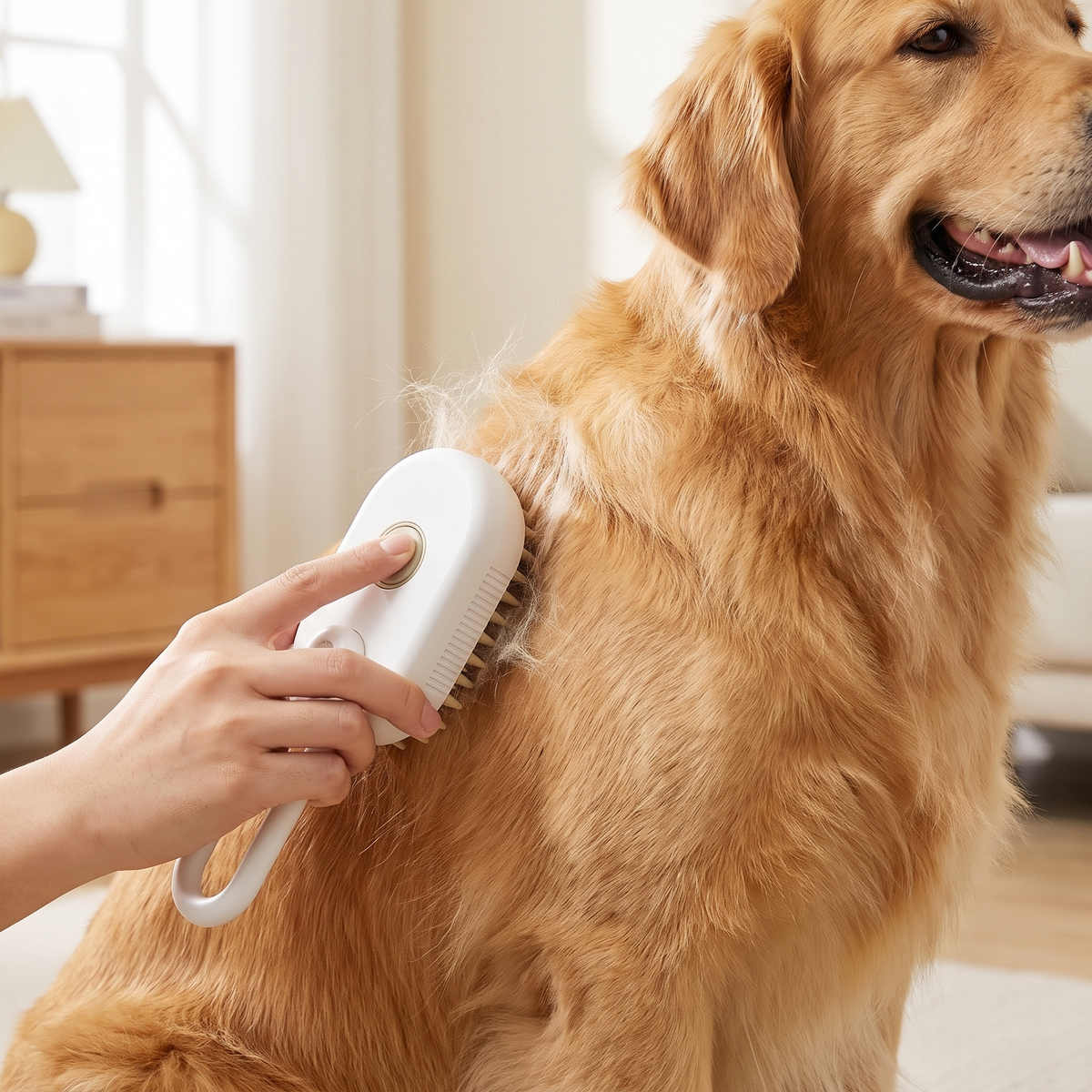
A dog brush does not do the same job on every coat. Before choosing a tool or schedule, identify the task: removing loose hair, maintaining long strands or checking areas prone to tangling.

Look at the coat first
Consider length, density and whether there is an undercoat. Identify friction points, including places under the harness. Do not choose the tool based only on your dog’s size.
- Short hair: use a tool suited to the skin and watch the pressure.
- Long hair: work in small sections without pulling on knots.
- Dense undercoat: ask which tool suits the coat and season.
Keep the session simple
Choose a stable place and start briefly. Brush in the direction of hair growth, watch your dog and take breaks. Clear hair from the brush regularly so you can see what it collects and maintain a gentle stroke.
A soft-bristled tool may be useful for everyday care without being suitable for every grooming task. Do not compensate for an unsuitable tool with repeated brushing.
Know when to ask for help
Do not force tight knots or keep brushing a sensitive area. A groomer can suggest a coat-appropriate method; a vet is the right contact if the skin seems painful or you notice a concerning change.
Afterwards, remove hair from the tool, clean it according to instructions and let it dry. If several people groom your dog, record the areas already done to avoid unnecessary repetition.
Frequently asked question
Will one brush be enough?
Not always. The choice depends on coat structure and the care needed.
Read next: How to Clean and Store Your Pet’s Accessories
Further reading : Source 1