
How to Walk Your Dog: A Calm, Flexible Routine
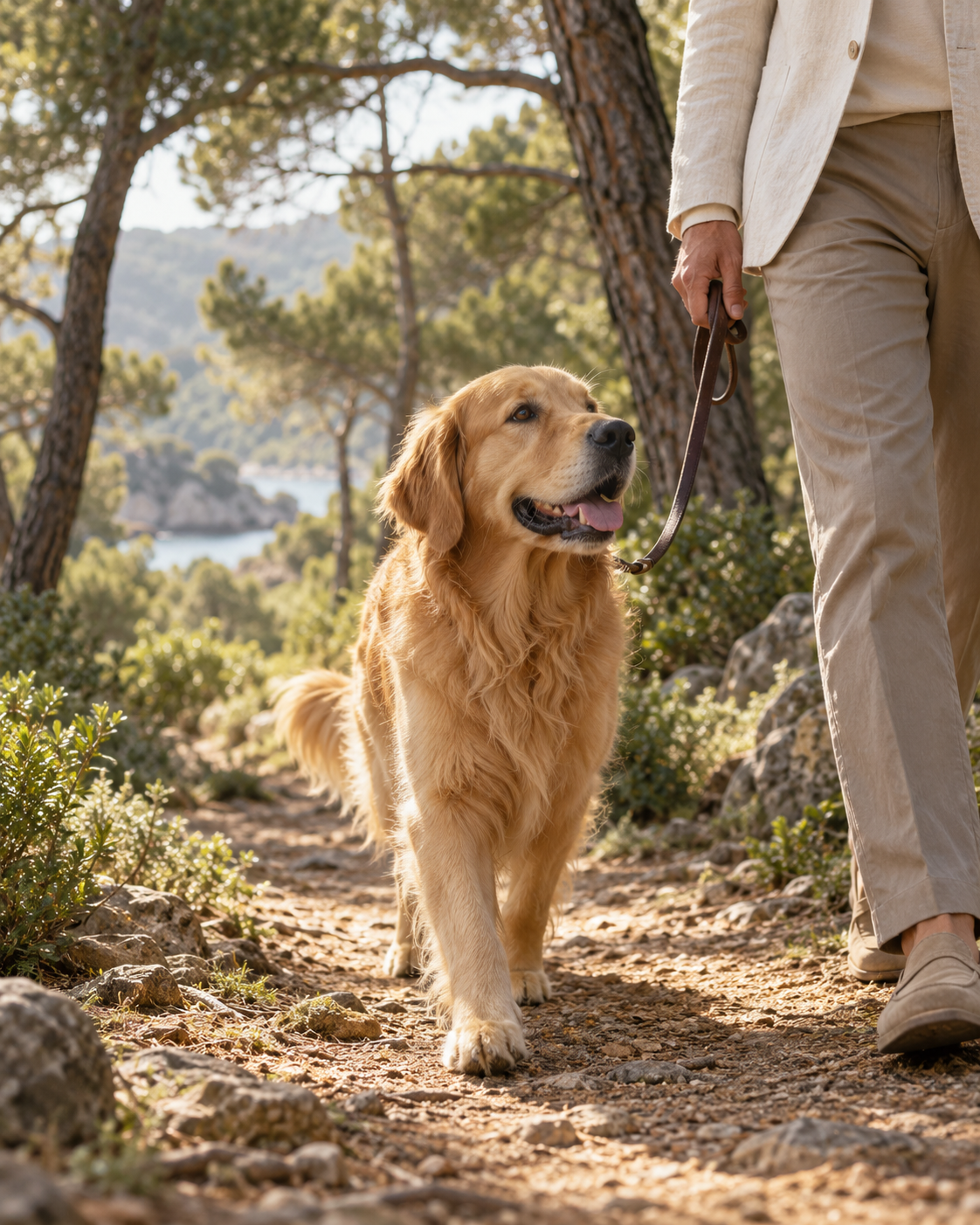
A good dog walk starts before you open the door. Choose an outing that fits your dog’s pace, the surroundings and the time available, rather than trying to complete the same circuit every time.

Prepare the essentials
Keep the lead, bags and water together. Check the fastenings and plan an easy route home. Look at the forecast and choose an alternative if your usual path is crowded, noisy or exposed to hot weather.
Decide what this outing is for: a toilet break, a walk with time to explore or a short familiar trip. A clear purpose helps you manage the time without rushing your companion.
Give the walk four stages
- A calm departure: fit the lead before opening the door and leave enough space to get outside.
- Exploration: allow opportunities to sniff in safe places. Smell helps dogs learn about their surroundings.
- A pause: find a quiet spot to check their comfort and offer water.
- A simple return: avoid adding intense play when you have already decided to head home.
Build a useful route notebook
For a week, record one helpful observation after each walk: a difficult street, a peaceful spot or a comfortable time of day. The aim is to discover what works for you, rather than measure your dog against another animal.
Shortening a route can be a sensible choice. Ask before approaching other dogs and give people space when requested.
Frequently asked questions
Is there an ideal walk length?
No. Adapt activity to your dog. Ask their vet about exercise if you have questions relating to age or health.
Should we change routes every day?
You do not have to. Small variations on familiar paths can work well.
Read next: What to Take on a Dog Walk: A Practical Checklist
Further reading : Dogs Trust